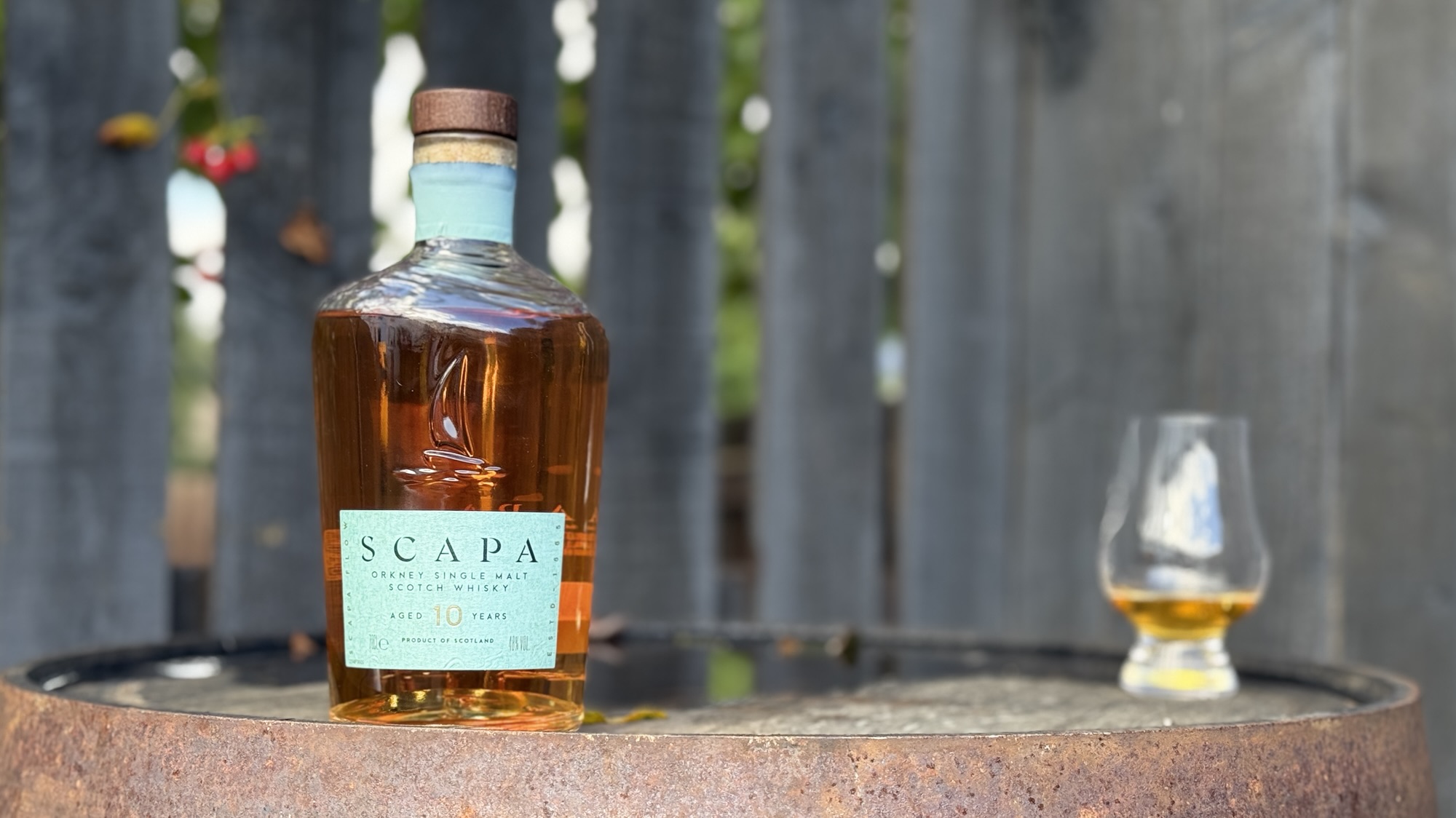

A Scot on Scotch reviews a new(ish) ten-year-old single malt Scotch whisky from Scapa Distillery in Orkney.
Scapa Flow
The Lure of Scapa. Where the German Fleet Lies Low. It is a place like no other, this almost landlocked sea, and though a dozen bays and sounds cut its approaches, the great Flow lies aloof, solitary, majestic and inspiring. It was ever lonely, wrapped in the immensity of northern hills, with their blended harshness and beauty, typically Orkney, though, even in those nights of howling wind and winter blackness, the lights of great ships, that ever beat in against its sleet-swept fastnesses, lent glamour. But now the watch has ended, and sunnier seas have claimed its ships. The cold of desolation has entered everywhere.
– extract from the Weekly Gazette, Saturday 9th August 1919.
The Scapa Distillery overlooks Scapa Flow, the famous body of water in the Orkney Islands that was the scene of the infamous scuttling of the German fleet in 1919…
When the First World War ended, the Imperial German Navy’s High Seas Fleet was interned off the harbour of the British Royal Navy base at Scapa Flow while negotiations took place. However, Admiral Ludwig von Reuter feared that the ships could be used against his homeland should the German government reject the Treaty of Versailles and resume the war effort and rather than let that happen, he decided to scuttle the fleet.
British guard ships intervened but with limited success. 52 of the 74 vessels sank and though some were later salvaged and towed away to be scrapped, many remained on the sea floor. Today, the area is a popular location for diving enthusiasts.
Scapa Distillery
For most of the time I’ve been drinking Scotch whisky, Scapa has felt like something of an outlier. A single malt brand that didn’t seem to offer an awful lot to the market. A small core range of no-age-statement expressions were of acceptable quality but failed to inspire any great excitement whenever they crossed my path, and I don’t think I was on my own in that experience. I don’t ever recall anyone passionately recommending Scapa or naming it as their favourite dram, for instance.
In truth, however, it has been some time since I checked in on the brand and a recent look at the website showed me that much had changed since my last visit. It would seem a new core range has sneaked under my radar. With 10, 16, and 21-year-old versions leading the way. There’s a new image too, with bespoke squat bottles and various shades of pastel blue utilised in the admittedly attractive packaging. What really piqued my interest, though, was the 48% bottling strength and the reasonable asking price of the 10 year old. I decided it was time to become reacquainted with Scapa!

Scapa Distillery has been around a fair while. It was established in 1885 by Glasgow-based blender, John Townsend. Ownership has passed from one to another over many years but the current owner is Chivas, the whisky arm of Pernod Ricard. Historically, the spirit produced by the distillery supplied various blended Scotch brands but now, the vast majority is used for the single malt range.
The distillery is fitted with an unusual set of stills. The Lomond still design was pioneered in the 1950s to allow for the creation of a range of flavours using a single setup. The neck of each still contained adjustable copper plates that could be opened or closed to impact copper contact and encourage reflux. Nowadays, the plates have all been removed but there is still a significant amount of copper contact in the distillation process, and a purifier further increases the reflux.
Scapa 10 year old Review

The Scapa 10 year old single malt is matured in American oak (presumably ex-bourbon) and bottled at 48%.
Tasting notes: The nose has some malt and grist with toffee, and oak shavings. Some cinnamon, some nutmeg, and sweet honey… there’s a definite tropical fruits vibe, with a big waft of pineapple and some lemon curd. After a while it started to smell like Werther’s Originals Butter Candies.
On the palate, it arrives with more fruits – pineapple, again leading the way. Also getting pastries, toffee and oak but then..! Around the mid-palate there was a touch of heat that crept in, something I found a wee bit unpleasant. I don’t mind a bit of spice in a dram but this heat had an almost chemical nature. Even a wee bit of burnt rubber with an aniseed flavour to it, maybe some liquorice. Mercifully, the butter candy note came back at the finish.
Thoughts: I’ll talk about the good stuff first – the fruit notes are nicely pronounced and there’s a wonderful oiliness to the spirit. It also mists up quite dramatically when water is added, so I’m guessing it’s un-chill-filtered. That’s nice to see but the orange appearance of the liquid suggests the liberal use of caramel colouring.
As for the actual sipping experience, I couldn’t really get over the chemical heat I was picking up. At times it felt like I was knocking back a dram of new make at 67%. Absolutely not what I expect to encounter in a ten year old malt. I tried adding a splash of water and that assisted slightly but I couldn’t get rid of it entirely. I even went back and tasted the whisky on three separate days – thinking that maybe my palate was a bit off – but each time I had the same experience. Sad to say, this one feels like a near miss. It gets a lot right but there’s a rawness there that just isn’t very appealing to me.
Interestingly, I had a very similar experience when I reviewed an old version of Loch Lomond. I found the same combination of tropical fruits with an unpleasant chemical vibe. It’s interesting that both distilleries use similar Lomond-type stills and I can’t help but wonder if there’s a connection there.
Price: £55. No problems here. I’m quite happy to pay this sort of money for a ten-year-old dram that’s bottled at higher strength but unfortunately I don’t think this is one I’ll be recommending.
For more on Scapa Distillery visit here
Leave a Reply