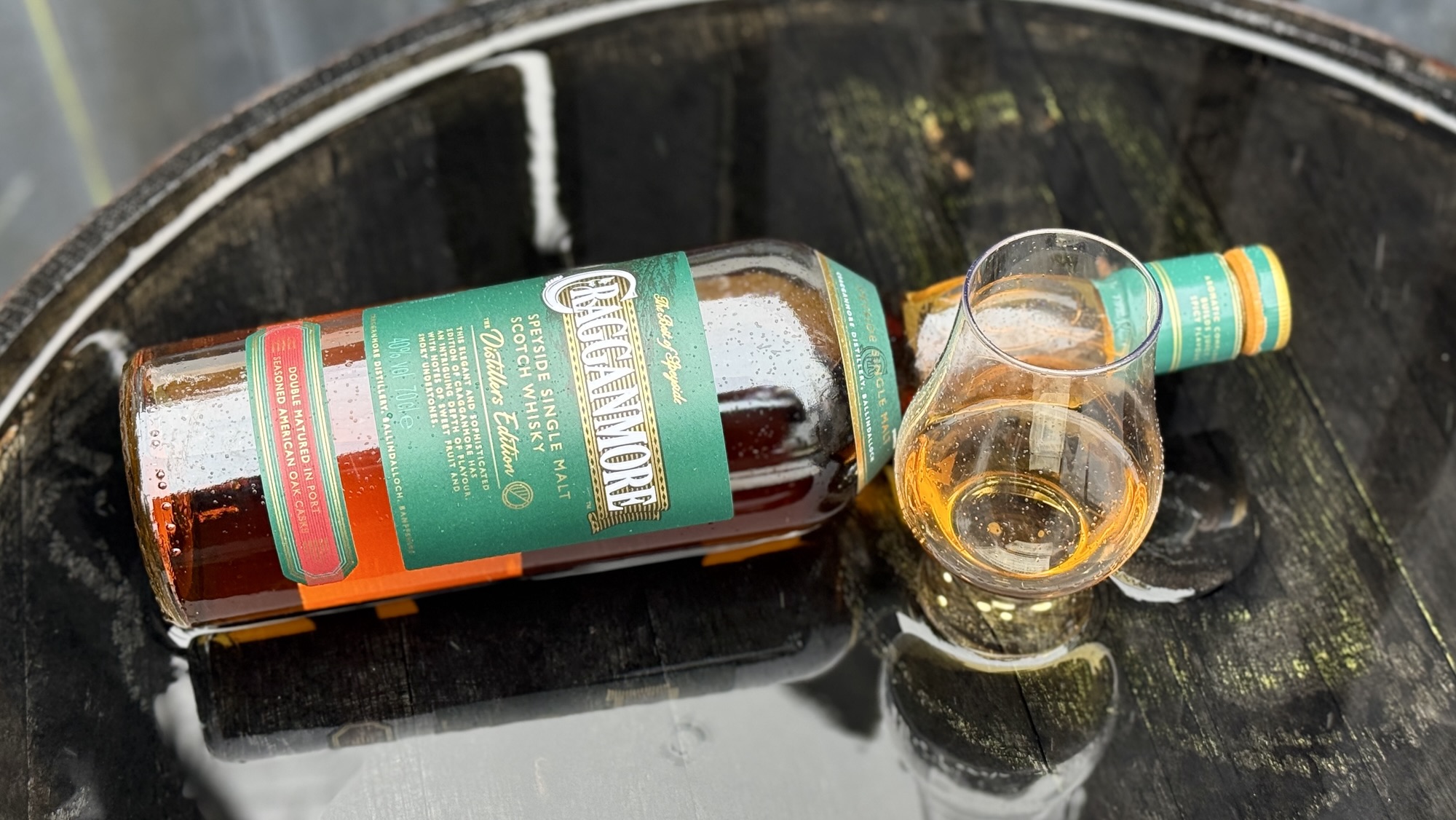

A Scot on Scotch reviews the Cragganmore Distiller’s Edition Speyside Single Malt Scotch Whisky.
Cragganmore has always been a well-kept secret in Scotch whisky. The Diageo-owned Speyside distillery produces a whisky full of character and personality, yet it has never reached the level of fame enjoyed by its successful neighbours. The likes of Glenfiddich, Glenlivet and Cardhu are known the world over but for my money, Cragganmore’s dram could easily stand up to them all.
This strange wee story was printed in the Edinburgh Evening News of Monday 25th June 1877.
It was between Ballindalloch and Carron on Saturday afternoon, that I first tasted the Cragganmore whisky. The single compartment of a third-class carriage in which I was travelling was filled with male passengers, all more or less sweltering in a temperature approaching 112 degrees of heat. One gentleman produced a neat little bottle, saying, as he courteously handed it to his left-hand neighbour – evidently not a native of Ballindalloch – “Here, tak’ a drap o’ the Cragganmore.” The stranger smiled thankfully, drew the cork gingerly, and took a short pull at the liquor, but no sooner had he done so than his face assumed a purple colour, and he appeared to be endeavouring to swallow his tongue, or something else that had suddenly turned red hot in his mouth. Then tears flowed from his eyes and large drops of perspiration stood on his forehead. Hastily, and without uttering a word, he offered the bottle to its owner.
The bottle in time was passed to the man at the end of the seat, who, after taking a hearty gulp of the “dram,” passed it in turn to a very red-faced man who sat opposite to him, remarking, after several appreciative smacks of the lips, “Dod, laddie, I wouldn’t say that’s oot o’ an aul’ cask, by the taste o’t.” “Aweel, nae matter,” replied the red-faced man. “We’ll jist pit it in another aul’ cask;” and he threw his head well back, and smiled benignly as he took a long and leisurely drink.”
Cragganmore was established by John Smith in 1869, six years after the Strathspey railway spread out across the northeast, connecting Speyside with Perth and the south. Smith was a distiller of great experience, having previously worked at Macallan, Glenlivet and Glenfarclas. He chose his location on Ballindaloch Estate specifically because of the advantages offered by the speedy new transport link.

Smith’s distillery remained in his family, following his death and was refurbished in 1901 with the help of the renowned architect, Charles Doig. The distillery changed hands in 1923 and was later taken over by the Distiller’s Company Ltd (DCL) in 1927. Through a series of mergers and takeovers, DCL evolved to become Diageo, who retain ownership of Cragganmore to this day.
The production of Cragganmore is something of a curiosity. The Pot Stills have flat tops which should increase reflux as vapour condenses on the top and drips back into the pot to be redistilled but any lightness that creates is contradicted by the worm tub condensers, which significantly reduce copper contact and promote weight in the spirit. The result is a spirit with more character and complexity than many of its competitors.
In 1988, Cragganmore’s 12-year-old was chosen by its owners to form part of the Classic Malts, a range of whiskies that would introduce consumers to the variety of styles produced across Scotland. The selection also included Glenkinchie, Dalwhinnie, Oban, Talisker and Lagavulin.
Cragganmore Distillers Edition Review

Diageo’s Distiller’s Editions are “finished” versions of the original Classic Malts lineup. In this case, the 12-year-old Cragganmore has been finished in port-seasoned American oak casks. It’s bottled at 40% abv.
Tasting notes: On the nose there’s forest fruits, berries and polished oak furniture. A touch of dark chocolate and confectionery sweetness. It’s a bit like sticking your nose in a box of Quality Street. There’s also some sweet honey and caramel. Oak and a very subtle whiff of smoke. It has a great arrival with fruity, berry notes and toffee. Turns woody and drying around the mid-palate with emerging oak spice. Raspberries, brambles, cherries. Furniture polish – I know this is a weird tasting note but it’s something I always find in port casks. I think it triggers a memory of a berry-scented spray polish that my Mum would use hurriedly whenever she learned that unexpected guests were en route.
Thoughts: When I added a splash of water there was a faint misting in the glass, suggesting that any chill filtering was deployed with a reasonably light touch. That might be a contributor to what seems a very satisfying mouthfeel, something no doubt aided by the distillery’s Wormtub method of condensation. Those tubs and the light touch of smoke give the dram an old-fashioned feel – and that’s meant as a huge compliment. It feels like sipping a Speyside malt of yesteryear. A bit like Benromach, in that regard. The port finish, too, feels really well integrated. It’s a fantastic wee dram all round.
Price: £90. As much as I like this dram, there’s no way I’d be paying the price quoted on Diageo’s website. £90 for a 12-year-old at 40% is scandalous. However, Diageo are throwing deals around at the minute and I grabbed a couple of bottles during Black Friday sales last year at around £32 – which was an absolute bargain. More recently I’ve seen it online for around £50 and that’s also fairly acceptable given the quality.
For more on Cragganmore visit here
Leave a Reply