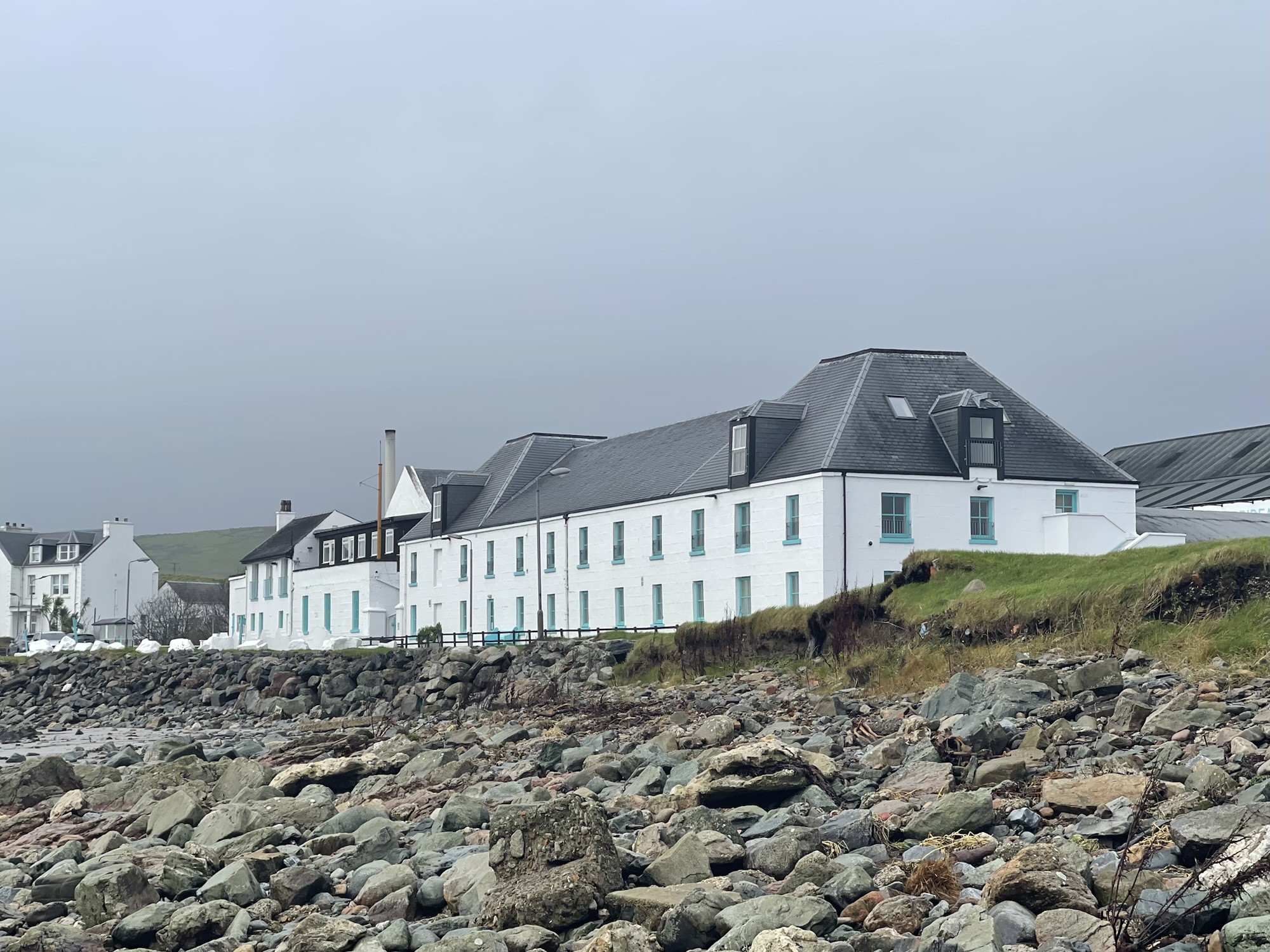

Reviews of affordable whiskies with some entertaining tales along the way…
Neill reviews a 2013 vintage Bruichladdich Islay Barley single malt Scotch whisky.
Islay Whisky from Islay
Bruichladdich began working with a local farmer, Raymond Stewart, in 2004. The goal was to re-establish connections between distiller and farmer, something which had long been forgotten in the world of bulk buying from the cheapest markets. Raymond took on the challenge and his success inspired others to follow. The distillery now has 19 farming partners across the island, each contributing to the creation of the Islay Barley single malts. Impressively, 50% of the distillery’s annual barley requirement is now homegrown.
Each Islay Barley expression is distilled from the barley of a particular harvest. In this review, I’m sampling the 2013 vintage, which was distilled from the 2012 harvest. The crop was grown on seven farms: Cruach, Coull, Rockside, Island, Mullindry, Dunlossit and Sunderland. The whisky was then aged for 8 years in a combination of ex-American and ex-European oak casks. It’s bottled at 50% abv. I’ve had several Islay Barley expressions over the years, the earliest being the 2007 vintage (if memory serves) and have enjoyed each to varying degrees but as with any batch-made product, some versions are better than others.
Bruichladdich has a fanatical interest in terroir, the French concept of the impact of land, climate and people on the character of a crop. It’s an interesting notion and one that there is increasing evidence to support – though for me, terroir seems only one small part of the shaping of a whisky.
The work Bruichladdich has been doing is still fascinating and raises possibilities. If climate, weather conditions etc impact the crop, then do certain flavours emerge during certain conditions? If you were to sample several years worth together, would patterns emerge? Perhaps you might prefer the spirit made from the harvest of particularly damp summers, while I prefer the crop of a long, warm season. It’s an interesting thing to consider.
For now, sadly, I’ll have to make do with getting to know the 2013 version. Which isn’t much of a hardship, in any case.
Bruichladdich Islay Barley 2013

Smell: Malt (obviously). Straw. Vanilla. Clotted cream. Danish pastries. Buttery shortbread. Lemongrass. Honey on oatcakes. Some subtle citrus. New oak and a wee bit of sawdust. There’s a tasting note that’s occasionally assigned to Bruichladdich that I don’t often pick up on but it’s here for sure. It may not be the most pleasant thing to contemplate in a glass of whisky but there’s a definite suggestion of baby sick.
Taste: Lots of honeyed malt with vanilla pods, clotted cream and biscuits. Custard creams. Black peppercorns. Drying oak around the sides of the tongue. Slight saltiness. Dry, malty finish.
Thoughts: As you would expect, the cask impact is fairly subtle, which allows the character of the barley to take the floor. It works well – what would be the point of swamping all that lovely Islay Barley in overactive wine casks, for example? Instead, Bruichladdich has allowed the quality of the spirit to carry the experience and the dram is better for it. The Islay Barley series often strikes me as an exercise in simplicity (although the farmers may argue that there’s nothing simple about growing barley in Islay). On the whisky side of things, however, this is all about knowing when less is more. Give good spirit a decent amount of time to mature in a good location and bottle it with minimal fuss at a decent strength and the results can be spectacular.
Price: £55 (although the official website asks for £70). When available at closer to £50 it’s a good buy. Nothing fancy, just good quality grain-led single malt.
For more on Bruichladdich visit https://bruichladdich.com/
Leave a Reply