
All Change?
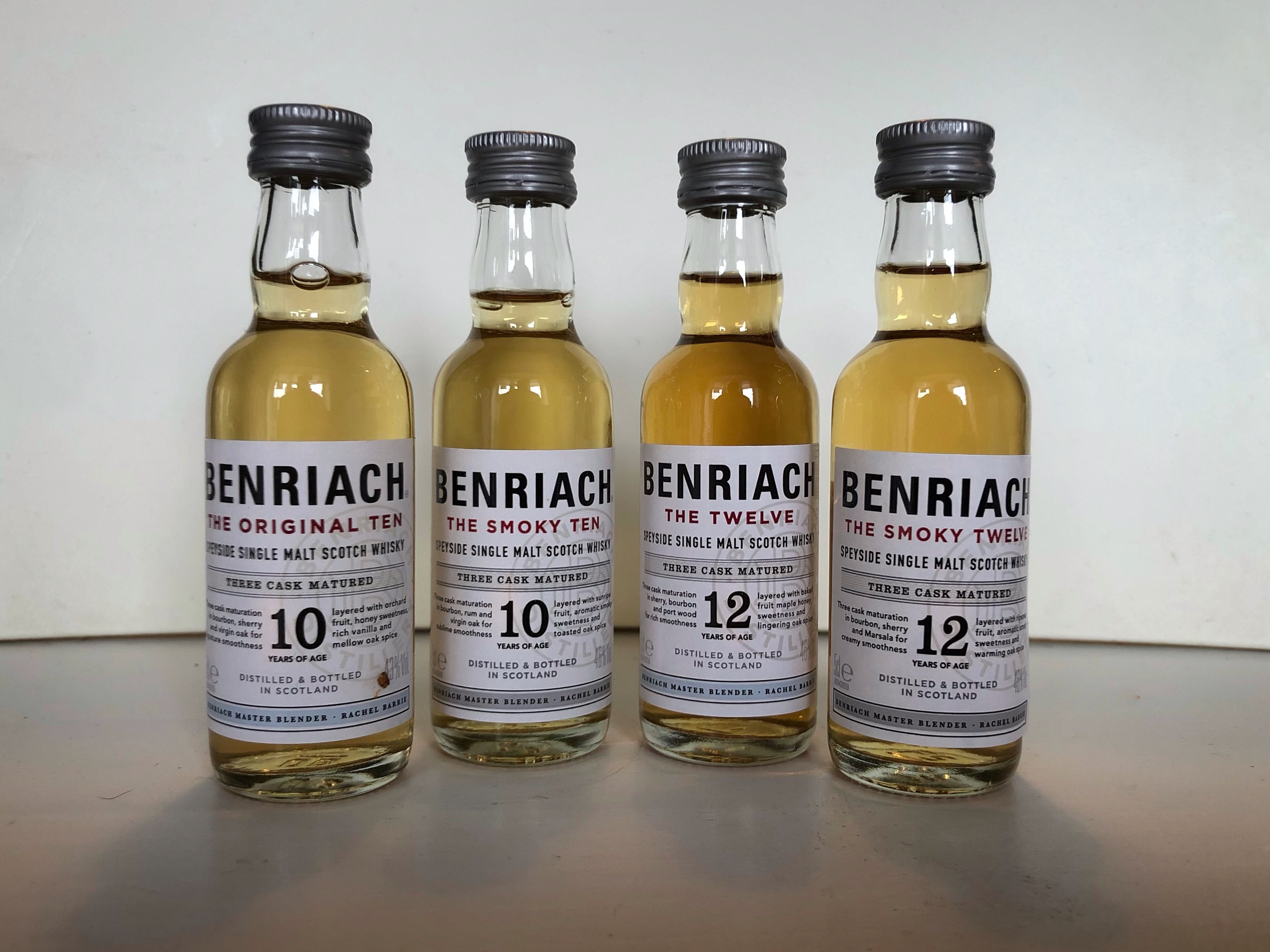
Benriach is a Speyside distillery founded all the way back in 1898. Since 2016, it has been under the ownership of American distiller Brown Forman, alongside sister distilleries Glendronach and Glenglassaugh. Late in 2020, Brown Forman announced an overhaul of the Benriach brand: a completely new range of single malts would launch with a new, contemporary packaging design.
I was something of a fan of the old Benriach malts but would have to concede that the range felt a wee bit chaotic at times. There were various age statements, crossed with Latin names, peated and unpeated versions and several cask finishes. It felt a bit hard to keep track of. So it’s perhaps understandable that the new owners felt some streamlining was in order.
It’s an interesting time for Brown Forman and its whisky brands with a hefty serving of controversy coming their way in recent weeks. The GlenDronach malt gained massive popularity under the previous owners and has, thus far maintained that following. Recently, however, eagle-eyed whisky lovers noticed a subtle change in the packaging of their favourite bottle – the words “non-chill filtered” had been removed.
You can see why such a change could upset people. Many emailed to ask the reasoning behind it and received what can only be described as a politician’s answer in response. I’m paraphrasing but it went along the lines “we reserve the right to do what is right for the brand but remain dedicated to putting out the best possible whisky”.
For those who don’t already know, chill filtering is a process that removes oils, fats and acids from whisky. It’s done to prevent the liquid from going cloudy in the bottle. There’s been ample debate over the years as to whether this affects flavour but personally, I prefer to see my whisky bottled as naturally as possible. There is, however, some evidence that mainstream markets are put off by a cloudy dram.
Curiously, whisky bottled at 46% abv (or above) will tend to remain free of the hazy effect and at present, the vast majority of the GlenDronach range is bottled at 46%, so the removal of the non-filtered declaration is a bit puzzling. Why start filtering if the ABV prevents clouding?
Paranoia soon set in among the online whisky community with fears that a lowering of strength could follow. Throwing a spanner in the works of such conspiracy thinking was Brown Forman’s decision to release a new core range from Glendronach’s sister distillery, Benriach, with 46% bottling strength across the board.
Eventually, Brown Forman felt they had to respond to a video review by vlogger Ralfy. That response stated categorically that no change in strength was planned. Which still leaves the question somewhat unanswered as to why the label change in the first place. Has there been some complaint from customers in warmer climes who dropped an ice cube in their dram and watched aghast as the Scotch mist appeared? Maybe the wording has been removed as a purely precautionary measure? What if the odd batch has a slightly hazy appearance and a wee bit of filtering is needed? You don’t want to change the label for each release.
We probably won’t ever know the full story and maybe that’s the real problem. A lot of the social media backlash on this, admittedly overly dramatic at times, could have been avoided with a little more transparency from the owners. If indeed the range is now being filtered as standard practice it doesn’t necessarily follow that it will become a bad whisky overnight. There are still very talented people involved in its creation. So why not be open and forward about the changes? Explain your reasoning. Your loyal customers have supported you in growing the brand. Surely they deserve that honesty?
So what of Benriach, Glendronach’s older and arguably less popular sibling. Personally, I’ve always enjoyed this dram. Many Speyside malts can be too delicate for my palate but Benriach is something of a chameleon, easily taking on peat and showing well in a wide variety of different cask types. It can be light and fruity in some expressions, bold and boisterous in others.
I’ve been keen to try the new range so when I saw an offering of a tasting pack as part of the virtual Spirit of Speyside festival I jumped in. Noticeably, there is no statement on the new releases regarding chill-filtering. Should we, therefore, assume that the liquid has been filtered, despite coming at a higher strength?
The Original Ten

Matured in a combination of bourbon and sherry casks and bottled at 43%. RRP of £37.
Smell: Lots of fruit at first. Apple, orange, lemon, peach. Pineapple and melon too. Beyond that there’s some malty biscuit notes. Fresh bread. Hay bales. Saw dust. Baking spices.
Taste: Lots of honey on arrival. Some peppery spice and oak towards the back of the palate. Apple and pear. More of that malty character. Fruit comes back towards the end. Cinnamon and almond on the finish. Orange peel soon appears alongside some sherry / dried fruit notes. Evolves well in the glass.
Thoughts: This is the lowest in strength at 43% but it drinks rather well and there’s layers of flavour that keep it interesting. Sure there are other good whiskies in this price bracket, but you could also do a lot worse.
It’s fully flavoured with a gentle, warming spice that really adds to the experience. It carries decent weight on the palate too.
The Original Ten seems like a pretty solid introduction to the new range. It has a recognisable Speyside / orchard fruits character but the addition of some sherry casks has provided some complexity and the spice prevents it from falling into the oft-dreaded “inoffensive” category. The whisky has retained some backbone and crucially, some character.
The Twelve

Matured for 12 years in a combination of bourbon, sherry and port casks before bottling at 46%. Retails at £38.
Smell: Oaky nose with red berries. Dried fruits. Cherry. A strong blast of ginger. Highland Toffee. Vanilla pods. Rum and raisin. Currants.
Taste: Warm sherry arrival with raisins and maple syrup. Runny honey. Lots of dry oak on the finish with some dark chocolate.
Thoughts: There’s little in the way of a price jump between the ten and twelve-year-old bottlings, which gives consumers a choice which way to go. I don’t think the 12 is necessarily better, but it is a very different dram.
Where the 10 was fruity and complex, the 12 is intense and woody. It is radically different. The 10 feels more spirit-led, whereas the 12 has seen some serious cask interaction. That higher strength of 46% may well be adding to the intensity of the experience. A splash of water failed to bring out any haze in the liquid. Confirmation that it has been chill-filtered? Though perhaps the real question is, does that matter? So far the drams have been pretty good and they don’t seem to lack weight. They’re also different enough from the previous bottlings that it’s hard to compare but from my point of view, there’s no obvious drop in quality from what came before.
The Smoky Ten

A peated whisky matured in bourbon, virgin oak and Jamaican rum casks. Bottled at 46% and retails for £39.
Smell: A really interesting nose! There’s fruity rum punch, grassy malt and freshly sawn oak. Smoke from a wood burner drifts up from the glass but it’s gentle rather than overpowering. The peat is woody, rather than maritime. Lots of baking aromas too. Croissants and pan-au-chocolat.
Taste: Honey and malty cereal notes to begin with. The honey intensifies as it covers the palate. Woody smoke with a touch of pepper comes through on the finish with some charred oak notes. With water some fruitiness appears, apple in particular.
Thoughts: An entirely different experience again, not just from the rest of the range, but from almost any other malt I’ve come across before. Once again, however, it shouldn’t cost you more than £40.
Peated malt matured in bourbon, rum and virgin oak casks sounds like quite a complicated thing to get right but Rachel Barrie, to her credit, has brought it together beautifully. Every time I thought I had defined the character of the dram it veered off in another direction, which ultimately made for a fun drinking experience. Complex, layered, nuanced… whatever descriptors you want to apply… it’s intriguing.
The Smoky Twelve

This peated malt was matured for 12 years in a combination of bourbon, sherry and Marsala wine casks. Bottled at 46%, it retails for £45.
Smell: Honey, malt and stewed fruits. Apricot. Orange and peach. Tobacco leaves. Liquorice. Fresh oak. Cinnamon and ginger. Pepper. Smoke is very subtle. Almost imperceptible.
Taste: Caramel and toffee. Walnut. Cigar smoke. Coffee. Sultanas. Liquorice. Peppery spice. Charcoal and old oak. The smoke is never obvious until the finish, when it lingers on the palate. Seems to get spicier with time.
Thoughts: A slight step up in price, but not much. On a personal level, I think I would rather have the Smoky Ten or even Twelve but the Smoky Twelve won’t break the bank if it appeals to you more.
With my first couple of sips, I thought this was quite a tame whisky. Probably the closest in style to the Original Ten, albeit with a little bit of smoke and a touch of Marsala. With each additional sip, however, the whisky seemed to grow in intensity, gathering spice as it developed. It didn’t quite live up to the Smoky Ten, or even the Twelve, but that’s probably a matter of taste and opinion.
Conclusions
Working my way through this new range has been an interesting experience. Especially against the backdrop of the drama with Glendronach. Does the quality of the new drams live up to that of their predecessors? That’s hard to say. Looking back at old reviews, I thoroughly enjoyed the old ten-year-old Curiositas but how that would compare to the new Smoky Ten is impossible to say without a side-by-side tasting. That might now be difficult with Benriach but maybe not with Glendronach. It would be very interesting to taste an old un-chill-filtered Glendronach alongside new (potentially) chill-filtered Glendronach.
In the meantime, the new Benriach range is solid enough. The Smoky Ten stood out as the most interesting to me, but I enjoyed them all. I wasn’t blown away, but perhaps that’s expecting a bit much from four bottles costing £40. Maybe the really spectacular stuff will come further up the range.
Only time will show us the long term impact of Brown Forman’s recent changes. Maybe the whisky will remain as good as ever and the whole affair will blow over. Or maybe the people who put Glendronach in the position it enjoys will move on to something new. Maybe Glendronach will find a new, mainstream audience and challenge the Glenfiddichs and Macallans. I would suggest that people make their minds up with the aid of their palates. At least taste the whisky before you write it off. Don’t judge it on what you think it should be. Judge it on how it tastes. Only then can you truly decide if it’s worth the money being asked.
For more on Benriach visit here.
For more on Glendronach visit here.
WhiskyReviews.net is a free service and always will be. However, if you would like to support the author you can do so by subscribing for just £1 per month. Alternatively, you can make a one-off donation of your choice. Thank you for your support.
________
Leave a Reply