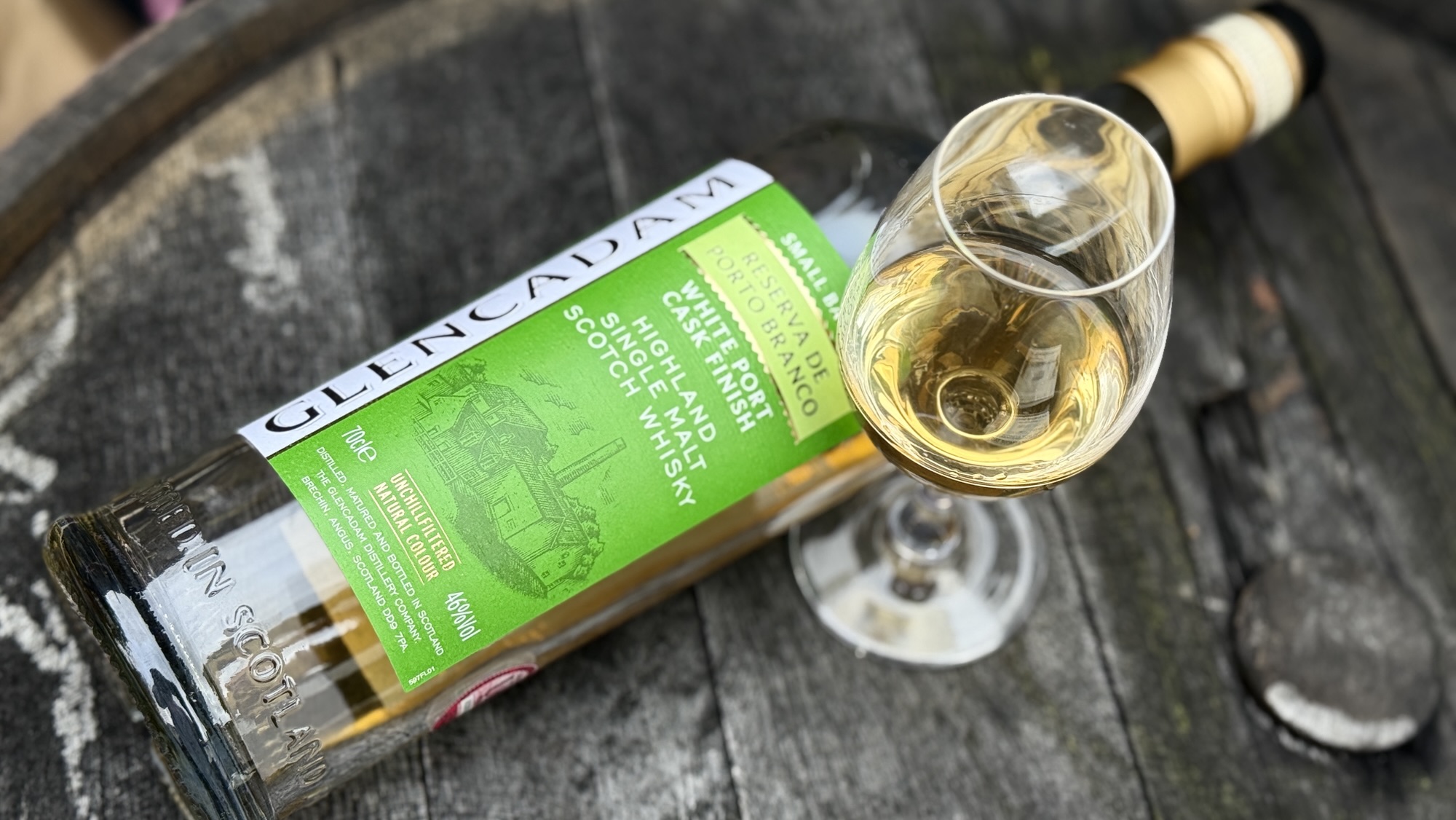

A Scot on Scotch reviews the Glencadam Reserva De Porto Branco Single Malt Scotch Whisky.
History of Glencadam
Glencadam is an old distillery, dating back to 1825. It was established about a mile from the town of Brechin but the name comes from the original settlement, Cauldhame, meaning Cold Home. The “Glen” was added so that the name fitted the whisky trend of the time.
Glencadam was the second distillery in the area after Brechin, later known as North Port. Built five years prior to its neighbour by the Guthrie brothers, North Port was owned by the same family ownership for almost 100 years. It was taken over by DCL (Distillers Company Ltd) in 1922 and then closed in 1928. Fortunately, Glencadam was able to stick around but it certainly encountered a few struggles of its own…
ALARMING FIRE AT GLENCADAM DISTILLERY.
Yesterday morning, fire was discovered to have broken out in the kilnhouse at Glencadam Distillery. Shortly before 9 o’clock, Mr William Stewart, Burgh Surveyer, and captain of the fire brigade, observed a dense smoke issuing from part of the building, and suspecting that a fire had broken out he immediately returned to enquire.
On his way to the place he was met by one of the workmen, who Informed him that such was the case. The fire brigade was at once ordered out and was on the spot in a very short time. Favoured with a plentiful supply of water and aided by the exertions of the workmen and a number of people from Brechin, they were enabled not only to keep the fire from spreading to the rest of the building but succeeded by a little after 10 o’clock in getting it completely under control.
The kiln house, in which the fire took place, is the most northern portion of the distillery, and the wind fortunately was blowing from a southerly direction; but for this fact the fire in all probability, would have been disastrous, as had the wind, which was pretty strong at the time, been blowing from the north, it is scarcely possible that the fire could have been prevented from spreading to the southern part of the building.
The damage consists in the destruction of about 16 qrs. of barley malt, which was in the kiln, and the kiln itself is so much damaged that it will have to be wholly removed. The damage to the building is but slight. The total loss, so far as can be estimated, will amount to something like £70 but this, with the exception of the loss of the malt, is covered by insurance.
It is believed that the fire had originated through the high wind that prevailed at the time, causing an overdraught which had heated the kiln to an extraordinary degree, and thus ignited a quantity of debris which had been lying between the floor of the kiln and the skirting.
– Montrose Standard. Friday 09 January 1885.
Glencadam was bought by Hiram Walker in the 1950s and from there, sold to Allied Distillers. It was mothballed in 2000, then sold to Angus Dundee, a blending company based in London, in 2003. It remains under the same ownership today and is sister distillery to Tomintoul in Speyside.
In my opinion, Glencadam is a hidden Highland gem of a whisky. Angus Dundee bottle the malt at 46% as standard, and it delivers a full-flavoured experience as a result. Something all too rare in the north-east of Scotland.
Glencadam Reserva de Porto Branco Review

This whisky was released as part of Glencadam’s Reserva series. It was aged initially in ex-bourbon American oak casks before being transferred to White Port casks from Portugal. Most port, like Tawny and Ruby, are made from red grapes but White Port is made from white (green) grapes and usually has a flavour profile of citrus fruits and nuts…
Tasting notes: There’s a definite white wine vibe about the nose. Plenty of acidic citrus fruits. Touch of olive oil. Some toffee in there too. A wee bit malty and nutty. There’s also lots of oak – it’s quite a woody nose, but it’s fresh, spicy wood rather than old, damp, dunnage oak. On the palate, there’s a sweet arrival, which comes across like toffee and fudge at first, then turns towards woody spice in the middle and ends as a dry, winey finish. With water, the early sweetness turns more towards fruit sweets, fruit pastilles, in particular.
Thoughts: It took me a couple of drams, but I’m starting to really enjoy this bottle. There’s a delightful mouthwatering sensation that’s triggered just before it enters into the dry finish that’s really fun. There’s spice, but it’s spice as seasoning, rather than heat and very nicely balanced with the other elements. A splash of water brought out some lovely oils and created a fantastic mouthfeel that flowed over the palate. Really enjoyable wee drop that delivers an unusual but enjoyable flavour profile.
Price: £47. Something a wee bit different from a distillery most of us don’t explore often enough.

Leave a Reply